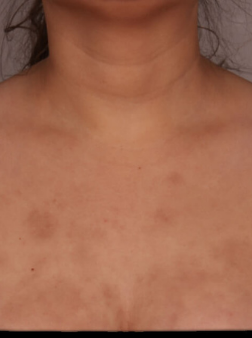
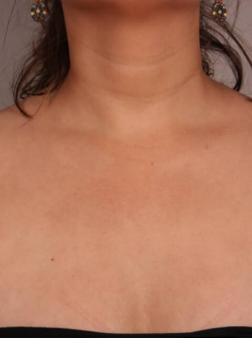
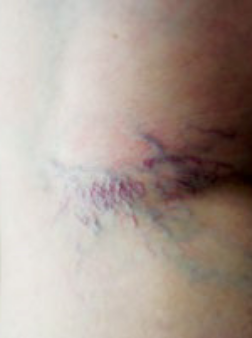
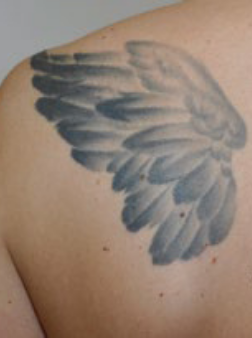
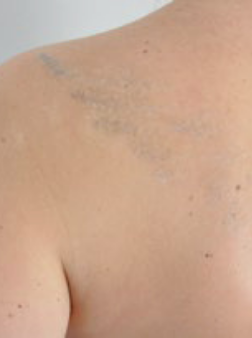
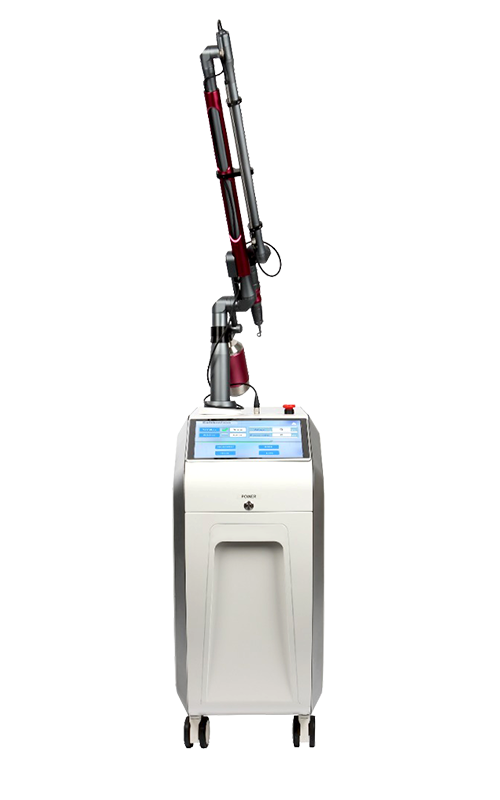
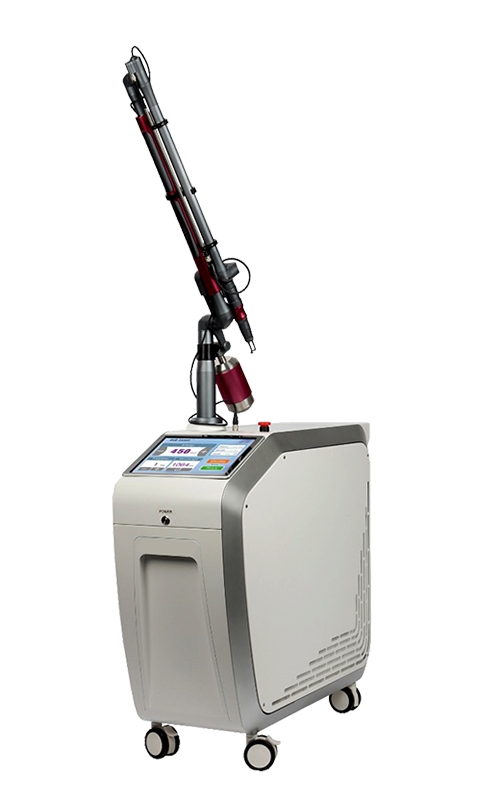
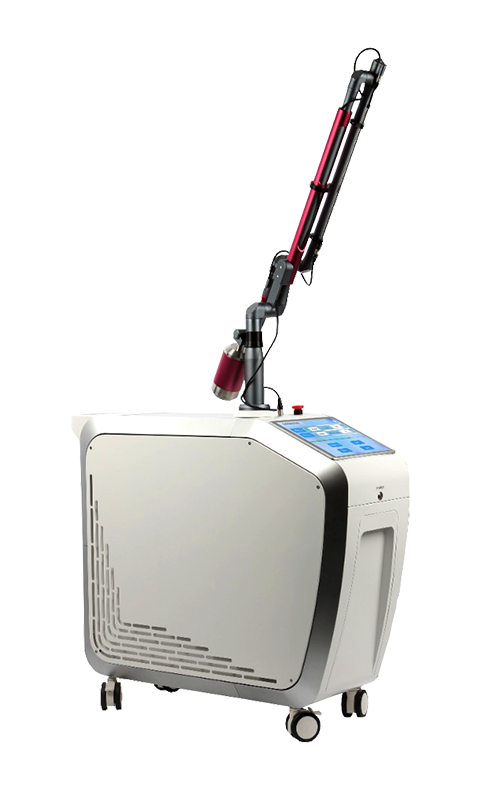
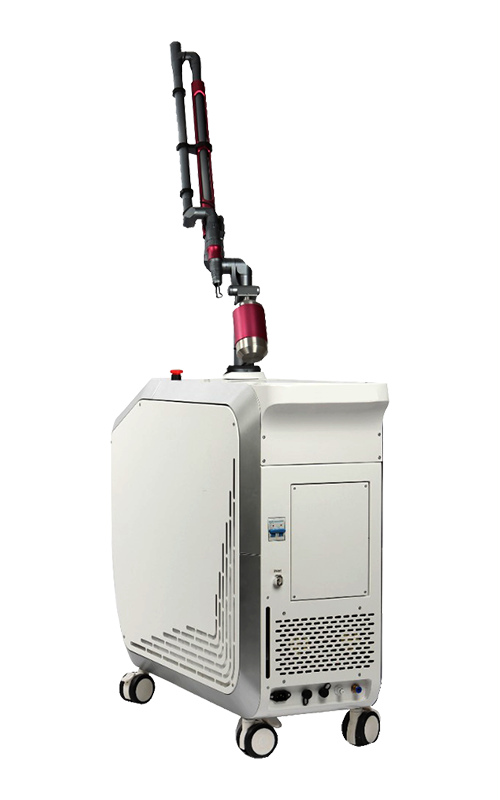
When clients want to remove birthmarks, moles, hyperpigmentation and tattoos, we suggest the use of the Monaliza Q-Switched Nd:YAG Laser. The Monaliza was designed to target various types of pigment in the skin and can achieve significant lightening of pigmented lesions and tattoos.
Monaliza has the unparalleled efficacy to target pigmentation in the skin and ideal for a variety of skin issues, primarily unwanted tattoos.
MonaLiza’s Q-switched Nd laser is the most effective method for tattoo removal.
With new advances in Q-switched Nd laser technology, tattoo removal can be achieved with minimal risk of leaving uneven pigmentation on the skin. The MonaLiza 532 nm laser can be used to remove red, sky blue and green pigments. The 1064 nm is used for removal of black and blue pigments.
Safe for Clients.
With an ultra-short pulse duration (5ns), high peak power, and essential wavelengths for versatility on colors, the Monaliza removes tattoos and corrects pigmentation issues. Integrated with real-time energy monitor, adjustable handpiece, water filtration system, allows the Monaliza to uniformly distribute energy to achieve better results with less side effects.
Monaliza is fully customizable to be safe and effective on all skin types and skin conditions.
Monaliza’s easy-to-use interface, the wavelength, Energy, and Frequency can be adjusted as needed. Unlike some lasers with only smaller spot sizes or inadequate fluence at large spot sizes, the Monaliza allows the technician to choose a spot size ranged from 2mm to 10mm while automatically adjusting the fluence to accommodate both small and larger treatment areas.
TECHNOLOGY: IT's ILLUMINATING
How [MonaLiza] Works
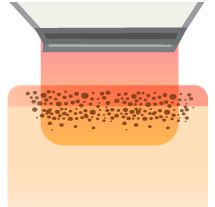
1. The beam of light energy targets the treatment area.
Monaliza creates a high-powered beam of light energy that pulses at a billionth of a second.
2.The laser’s pulses shatter the pigment into small particles.
When the beam of light hits your skin there is a photo-acoustic effect indicating the melanin or ink is adequately heated and fractured into tiny pieces.
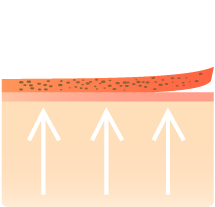
3. Treated skin begins to eliminate pigment particles.
The broken-down particles are easily carried away by your immune system or peeled off from the skin surface gradually revealing clear skin.
Frequently Asked Questions
1How many treatments are needed for tattoo removal?
On average, professional tattoos require 5-6 treatments, while amateur tattoos may require 3-4 treatments. Each treatment should be spaced approximately one month apart. The number of tattoo removal treatments depends on the amount and type of ink in the skin. Rarely, more than ten treatments may be needed.
2How many treatments are needed for pigment correction?
Some types of pigmentation will respond better than others. Superficial brown marks caused by age and sun can resolve with 1-2 treatments, while deeply pigmented birthmarks may require multiple treatments or may not disappear completely. Due to the variability in the size, depth, and darkness of spots, and in a person’s natural ability to clear away pigment after laser treatment, it is not possible to predict results after a fixed number of treatments.
3What is expected after a treatment session?
Immediately following treatment, whitish bubbles will appear on the treated tattoo area, accompanied by some mild redness and swelling which will resolve within 24 hours. A thick crust will appear over the treated area and will fall in about 2 weeks. In rare cases, minimal bleeding in the treated area can occur. Fading of the tattoo or pigmentation is gradual and will be noticed in the following weeks.
4Why choose MonaLiza over of other technologies?
The Monaliza laser system is equipped with electro-optic Q-Switched technology, which output higher energy. This design makes the pulse width as short as 5ns, while doubling output. The Flat-top beam output, uniformly distributed spot energy without additional heat to achieve better treatment results with less side effects.
5Why use Kuma Shape instead of other technologies?
The versatility of the Kuma Shape technology offers quick and effective treatments that are designed to maximize results anywhere on the body. The user-friendly interface ensures technicians can safely tailor treatments to each client.
REAL RESULTS
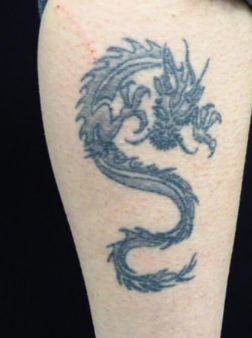
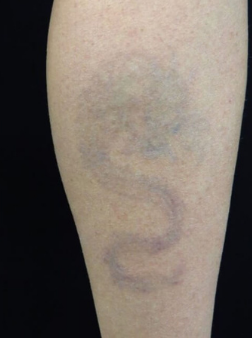
The pigmentation or tattoo will begin to fade after one to two treatments. The depth, color, and amount of ink, as well as the location of the tattoo on the body are all determining factors in how quickly the tattoo can be removed.
The device adopts a Q-switched Nd:YAGlaser module with bi-wavelength of 1064nm&532nm. For 1064nm, the maximum pulse energy is over 600mJ; For 532nm,the maximum pulse energy is over 300mJ.
The device adopts a seven-joint articulated arm, which is installed to the main console with locking screws. The output efficiency of the articulated arm is above 80%. A handpiece with adjustable spot size is at the end of the articulated arm. The treatment spots size can be adjusted from 2 to 10mm.
The system includes a circulating cooling system with deionized or purified water. The water pump cycles water into the laser device. After the laser is cooled down, the water will run through the condensers, then back into water tank. The condenser use fans to keep the water cool. The cooling system uses a water flow and temperature sensor to monitor the working status of cooling system and to control and automatically regulate the cooling system in real time.
The system adopts integrated laser power and the laser power could be communicated with the system controlling core, which controls the output voltage and relevant synchronization information and then control the laser module energy output.